Entradas con "Translation" disponen de versión castellana.

Sunday, May 20, 2012

El gato de la suerte - The Beckoning Cat

Concurso twitter de "Generación del 140"


Tonight the street absorbs her steps. Fading, unreflected in the window, she accepts the insistent greeting from the beckoning cat. @140GE

Tweet ganador:  https://twitter.com/#!/140GE/status/203649362822299650

En fin.

Wednesday, May 9, 2012

Wooden Thing

La Barceloneta  6 April 2012
Junto con los artistas que forman parte del colectivo Ars Nexus -bajo cuyo nombre nos reunimos en tertulia los viernes- participé el primer día en ExpoArt al carrer escribiendo este relato.
     (Ars Nexus: http://arsnexus.blogspot.com.es/
I joined up with artists from Ars Nexus -under whose auspices we writers hold our Friday tertulias- to take part in the first day of ExpoArt al carrer by writing this story.


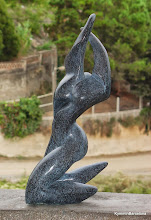
La foto es de la escultura que hizo Olga Vidal, y que sale en el relato.
The photo is of the sculpture done by Olga Vidal which made its way into the story.


BTV hize un reportaje.  /  The local TV station reported on ExpoArt.
http://www.btv.cat/btvnoticies/2012/04/06/expoart-barceloneta-tallers-artistes/
The story was a response to http://www.studio360.org/crowdsourcing/listener-challenge-significant-object-3/report/


     That wooden thing he had displayed on the bookshelf like a piece of modern art – to me it looked
more like some religious relic – kept me up at night. I had emptied the kitchen drawers of all his fancy
doohickeys and William Sonoma gadgets; I’d sorted out his clothes -shall I confess to keeping a clean
pair of boxers in his underwear drawer?- and allotted appropriate recipients. My Dad got a woolen
winter coat, I gave his brother a brand new pair of shoes, and I kept a couple of t-shirts for myself.
None of his books were any I would read, most being treatises on economics, Marxism or the Cuban
Revolution, so they all went in the trash. No apologies: into the dumpster. I kept the ones we gave each
other on a special shelf I cleared, titles at eye level.
I put his dead mother’s ceramics on the very top shelf, where I never looked and would not notice the
dust they carried.
When I was done with that, it was time to deal with his couch, which was too old to keep and
worthless to reupholster, so I bought another one that was the same size, shape and color.
Photographs were tucked away in boxes, a few souvenirs from his family –why were there all those
funeral cards?- were hidden in drawers and that was that. Until I noticed the chunk of wood.
I have to admit that I hadn’t really noticed it before. When I looked, all I saw was a piece of wood that
seemed to accompany the sculpture of a Pregnant Woman (She Was Carrying a Boy) that we had bought
at an art fair the Easter we spent in the Barceloneta. Now that I looked more closely, it was obvious that
it had nothing to do with the sculpture. It reminded me of the Ikea futon I’d finally given away a few
years earlier, but there were no uneven breaks in the smoothly polished surface, just an odd, articulated
stub.
It might have been part of a collection, if he had collected anything, which he didn’t. Neither did it
form part of any hobby, for he had never indulged in hobbies. It had been awful and disquieting to
discover how little space he’d actually occupied.
Thus it was that I remained so reluctant to dispose of this ungainly piece of wood. There was a surfeit
of space for his memory, and yet I felt there was something missing, maybe something missing in me
because I could not give the object a name, much less a purpose or meaning. Yet it had been his. He had
placed it there at some point, for some reason, and I did not know why.
It wasn’t like finding a key to an unidentifiable lock, or a packet of love letters, or a box of whips and
chains, but it was just as disconcerting. Had I asked, he might easily have said ‘It’s not mine, it’s yours ‘
or ‘I keep meaning to ask you what the hell it’s for!’ But now it sat beside the Pregnant Lady (with Baby
Boy) sculpture, and immediately began mocking me. How self-involved could a person be to not know
what this wooden thing was, what it meant to him, what its history was, under what circumstances he
had come to possess it. Forget about those people in his photo albums -just open the rings and entire
pages disappear-, those names in his old address books. This block of wood with its smooth curves and
articulated joint -was it part of some avant-garde train set?- sat imperviously upon the bookshelf,
challenging our time together, disdaining the home we had built, scorning my loss.
Soon, every morning I would pause by the bookshelf on my way into the kitchen, rub the sand out of
my eyes, and stare at the wooden object, willing it to reveal itself to me. It became the first thing I saw
when I snapped on the lights upon returning home every evening. Late at night, as I contemplated
returning to fitful sleep and dark, insomniac dreams, I would again stand before it and stare, trying to
make sense out of things being an integral part of my life and then not being a part of life at all.
I considered taking it off the shelf and putting it in a closet, but when I moved it away from the
sculpture of the Pregnant Woman (It’s a Boy) I had a violent premonition that engulfed me in sorrow
and guilt. I put the pointless wooden thing back in its place and felt a rush of relief. I stepped back, and
when I looked at it again it was with tenderness. No tears sprang to my eyes, my throat did not contract,
I was not saddened, angry or even perplexed. I decided that sudden joy was what I was feeling, although
it was really nothing more than an easy contentment. And because it was something I hadn’t felt in such
a long time, I confused it, was willing to confuse it, with joy.


La cosa de madera

   Aquella cosa de madera, que tenía expuesta en la estantería como una pieza de arte moderno –a mí
me parecía más bien una reliquia religiosa– no me dejaba dormir. Una vez liberados los cajones de la
cocina de sus complicados artilugios y cachivaches de William Sonoma; una vez ordenada su ropa -¿y si
confieso haber guardado unos calzoncillos bóxer limpios en su cajón de la cómoda?- me tocó designar
ciertos beneficiarios. Mi papá recibió un abrigo de lana, le di a su hermano unos zapatos sin estrenar, y
me guardé un par de camisetas para mí.
De sus libros no leería ninguno. La mayoría tratados económicos, sobre el marxismo o la revolución
cubana, acabaron todos en la basura. Sin disculpas: al container. Me guardé los que nos habíamos
regalado en un estante especial que vacié, dejando los títulos a la altura de los ojos.
Puse las cerámicas de su madre muerta en el estante más alto, donde nunca miro. Así no me fijaría en
su acumulación de polvo.
Cuando acabé con todo aquello, fue hora de ocuparme de su sofá. Porque era demasiado viejo para
seguir en ese estado, y no tenía sentido tapizarlo, al final opté por comprar otro del mismo tamaño,
forma y color.
Se guardaron fotografías en cajitas. Algunos recuerdos de su familia –¿por qué había tantas tarjetas
funerarias?- se escondieron en cajones, y se acabó. Hasta que saltó a la vista el pedazo de madera.
Debo admitir que no me había fijado en ello antes. Cuando miraba, solo veía un trozo de madera que
parecía acompañar la escultura de la Mujer Embarazada (Será Niño) que habíamos comprado en una
feria de arte durante las Pascuas que pasamos en la Barceloneta. Ahora que lo pienso, parece obvio que
no tenía nada que ver con la escultura. Me recordaba al futón de Ikea que había bajado a la acera por fin
unos años antes, pero no había ninguna rotura irregular en la superficie pulida, sólo una especie de
brazo chato y articulado.
Podía haber formado parte de una colección, si él había sido coleccionista, que no fue. Tampoco
formaba parte de ningún hobby, ya que él nunca estuvo por esos caprichos. Había sido terriblemente
sobrecogedor descubrir el poco espacio que en realidad habitaba.
Así fue que me sentía reacia a deshacerme de este molesto trozo de madera. Había espacio de sobra
para su memoria, y aún así me parecía que faltaba algo. Quizás faltaba algo en mí porque era incapaz de
nombrar al objeto, y mucho menos dotarle de alguna finalidad o sentido. Y sin embargo, le había
pertenecido. Lo había colocado allí en algún momento, por alguna razón, y yo no sabía porqué.
Desde luego, no fue como encontrar la llave de una cerradura no identificada, o un paquete de cartas
de amor, o una caja de látigos y cadenas, pero resultó igual de desconcertante. Si le hubiese
preguntado, podía haber contestado fácilmente, -No es mía, será tuya -o –¡Siempre me olvido de
preguntarte para qué sirve!- Pero ahora permanecía al lado de la escultura de la Dama Embarazada (de
un Niño), e inmediatamente empezó a burlarse de mí. Qué egoísta tiene que ser una para desconocer el
origen de esta cosa de madera, qué significado tenía para él, cuál era su historia, bajo qué circunstancias
llegó a poseerla. Obviaba esa gente de sus álbumes de fotos -no hay más que abrir las anillas y
desaparecen páginas completas- y aquellos nombres de sus viejas agendas, pero este taco de madera
con sus suaves curvas y ensambladura -¿formaba parte de algún tren de juguete?- permanecía inmune
sobre la estantería, poniendo en duda nuestro tiempo juntos, desdeñando el hogar que habíamos
construido, ridiculizando mi pérdida.
Cada mañana, de camino a la cocina, acostumbraba detenerme al lado de la estantería, quitarme las
legañas y mirar fijamente a la cosa de madera, instándola a revelarse ante mí. Se convirtió en lo primero
que veía cuando encendía las luces al llegar a casa por las tardes. De madrugada, mientras sopesaba
regresar al descanso esporádico de los oscuros sueños e insomnio, volvía a encontrarme de pie ante
ella, mirándola, contemplando el hecho de que las cosas pudieran formar parte íntegra de mi vida y
luego no formar parte siquiera de la vida.
Consideré quitarla de la estantería y guardarla en el armario, pero cuando la alejé de la escultura de la
Mujer Embarazada (¡Es Un Niño!), tuve una premonición violenta que me envolvía en pena y
culpabilidad. Volví a poner el anodino objeto de madera en su sitio y sentí un enorme alivio. Di un paso
atrás, y cuando la volví a mirar, lo hice con ternura. No me saltaron lágrimas a los ojos, no se contrajo mi
garganta, no me sentí triste, ni enfadada, ni siquiera perpleja. Decidí que era repentina alegría lo que
sentía, aunque no era, en realidad, más que cómodo bienestar. Y porque era algo que no había sentido
en tanto tiempo, lo confundí, dejé que se confundiera, con la alegría.


Sunday, March 25, 2012

Softball at Dusk (NPR 3-Minute Fiction, round 8)


She closed the book, placed it on the table, and finally, decided to walk through the door.
Evening was spreading a bluish shadow over the front yard when Jackie’s mother called again from the kitchen. "Didn't you hear what I said?" Jackie stopped short of the door and backed up the stairs.
"Joanne's the one who left it there," Jackie said. "Not me."
Her father's car crunched over the gravel driveway. Jackie listened for the slam of the car door. Her father would set things straight, make Joanne get her stupid ball, tousle Jackie's hair. The garage door opened and closed. Her father sat heavily on the stairs to take off his shoes, and her mother raised the tone of her voice.
"Jackie, go get the ball from the yard. Don't make me ask you again!"
"I didn't leave it out there," she said evenly, wondering if her father would make Joanne go to bed without any dinner.
"Jackie!" her father's voice boomed below her. "Get over here right this minute!"
Not daring to disobey, Jackie walked back down the steps to where her father stood by the front door. "It's not my ball," she whined, "I didn’t leave it there."
"I didn't ask who did what. Get out there and bring it in."
"It's not..."
Her father pulled her across the threshold and smacked her bottom, sending her stumbling across the porch into the murky twilight. The door clicked shut behind her. She stood in the dampening grass and tasted the metal onset of tears, blinking them back as the white softball went in and out of focus across the grey expanse of lawn. The unfairness of it engulfed her where she stood listening to the swish of cars passing on the road out past the wooden fence.
She shuffled down the brick path that lead to the driveway and the cold, dark, hungry world beyond. She stopped next to the umbrella tree, the showy one she had never climbed before. Her sister couldn’t climb trees. Jackie reached out and with a small jump grabbed a branch, swung her legs up. She eased into the crook where the thick branches spread out, trussed in heavy, oval leaves. She tucked her feet up under her and was hidden absolutely, sheltered and unafraid.
She sat wishing that she had her book, watching for a light in their bedroom window. Her father would appear soon. He would drag Joanne out and make her pick up the softball, send her to bed early, then come back outside and stand under the tree. "I’m sorry," he would say quietly before holding his arms out for Jackie to climb into, pretending not to hug her as he set her on the ground.
The light came on in her bedroom, then went out again. Across the street the McCarthy’s spaniel barked sharply. Cars continued to swish by, brake lights blinking red through her leafy blind. Jackie let a stream of tears dry on her face, swiped the back of her hand against her nose. Her stomach grumbled. It was so unfair. She dangled her legs against the rough bark, swung herself out of the tree and landed softly, dropping to her knees. She ripped at blades of grass and held them to her nose, breathed the crisp green smell. She stood to brush herself off, then walked to where the softball lay bright against the dark lawn and picked it up. She tossed it into the air and caught it again twice before turning towards the front door that shone orange under the powerful porch light.


(Versión en castellano)


Cerró el libro, lo dejó en la mesa, y finalmente, decidió pasar por la puerta.
El atardecer tendía su penumbra azul sobre el césped del jardín cuando la madre de Jackie volvió a gritar desde la cocina. -¿No me has oído? -Jackie se paró ante la puerta y volvió a subir las escaleras.
-Joanne la dejó fuera,- dijo Jackie.- No fui yo.
El coche de su padre sonó en el camino de tierra y Jackie esperaba el cierre de su puerta. Su padre pondría todo en su sitio, obligaría a Joanne a recoger su propia pelota. Despeinaría a Jackie con la mano al pasar. La puerta del garaje se abrió y se cerró. Su padre se dejó caer en un escalón para quitarse los zapatos, y su madre elevó el tono de voz.
-Jackie, ¡ves y recoges esa pelota del jardín! ¡No me lo hagas repetir dos veces!
-Yo no la dejé allí fuera, -dijo con voz queda. Quizás su padre enviara a Joanne a la cama sin cenar.
-¡Jackie! –la voz de su padre retumbó desde la entrada. -¡Ven aquí ahora mismo!
No podía desafiarlo. Bajó las escaleras hasta llegar donde le esperaba su padre ante la puerta principal. –La pelota no es mía –se quejó. –Yo no la dejé fuera.
-No he preguntado quién dejó nada ni dónde. Sal a buscarlo.
-Es que no es m...
Su padre le arrastró por el umbral de la puerta donde le pegó en el culo, enviándole a cruzar el porche dando traspiés hasta entrar en el hosco atardecer. La puerta se cerró con un clic detrás. De pie sobre la hierba húmeda, notaba el gusto metálico de un principio de lágrimas que paró con los párpados al enfocar y desenfocar el punto blanco que era la pelota de softball a través de la extensión grisácea del césped. Le fue creciendo la sensación de injusticia con el siseo de los coches que pasaban por la carretera al otro lado de la verja de madera.
Jackie arrastraba los pies por el sendero de ladrillos que llevaba al camino del garaje. Más allá esperaba el mundo frío, oscuro y hambriento, pero se detuvo al lado de la morera, el gran árbol de sombra al que nunca antes había subido. Su hermana no podía subirse a los árboles. Jackie alargó los brazos. Con un pequeño salto se agarró a una rama y elevó las piernas. Se acomodó en la horquilla de donde se extendían las ramas gordas, adornadas con pesadas hojas ovaladas. Se acurrucó con los pies metidos debajo y quedó escondida de manera absoluta; protegida y sin miedo.
Aunque echaba de menos su libro, se contentó con vigilar la ventana de la habitación por si se encendía alguna luz. Pronto aparecería su padre. Arrastraría a Joanne por el brazo hasta obligarle a recoger la pelota de softball. Le enviaría a la cama antes de hora. Luego volvería a salir. Se pararía debajo del árbol. –Perdóname –diría pausadamente antes de extender sus brazos para que Jackie bajara, fingiendo no abrazarle mientras le depositaba sobre la tierra.
Se encendió la luz de la habitación y luego se volvió a apagar. Al otro lado de la calle el cocker de los McCarthy soltaba ladridos secos. Seguían con su siseo los coches, y las luces rojas de los frenos parpadeaban a través del frondoso escondite. Jackie dejó que se secara un reguero de lágrimas en las mejillas y restregó la mano contra la nariz. Hacían ruido sus tripas. No era justo. Dejó caer sus piernas contra la corteza áspera y saltó del árbol, cayendo suavemente a las rodillas. Rompía unas hojas de hierba y las llevó a la nariz, inhalando el nítido olor a verde. Se puso de pie y se sacudía la ropa, luego se acercó al lugar donde quedó luminosa la pelota contra la hierba oscura y la recogió. La tiró al aire y la volvió a coger dos veces antes de girar hacia la puerta principal que brillaba naranja bajo el potente foco del porche.


Sunday, March 4, 2012

Bacalao al pil-pil

                                                                                                                                   (in English, too)

                                                                                           a los chicos de LosViernes

   Tú te doblas para llegar al horno, donde la honda sartén de metal negro con pecas
blancas calienta la ventresca de bacalao que te habían guardado en el puesto del
mercado. Agitas la sartén y me enseñas los trocitos de ajo que se deshacen en el aceite y
la grasa negra de la piel.
   -¿Ves que rico? -me preguntas con tu sonrisa de payaso, las cejas arqueadas y tus
manos enfundadas en manoplas de cocina que dibujan escenas de granja. Cierras la
puerta del horno y me coges en brazos. -Te va a encantarrrr -me dices contra la oreja
que me muerdes a continuación.
   Estamos en tu cocina, la cocina donde vivías cuando yo te conocí. Es nuestra primera
presentación como pareja y yo estoy nerviosa. Tú no, claro, porque es tu hermano y su
familia, su mujer y su hijo pequeño, y tienes muchas ganas de que me conozcan. Yo,
una mujer mayor, del imperio malvado, divorciada y con hija acuestas, no estoy tan
segura de caer bien. Es más: estoy en tu casa, haciendo de pareja tuya, cuando la casa
era de otra mujer, que había sido tu pareja y, con la pareja de tu hermano, los cuatro
erais culo y mierda. Con perdón.
   Te recuerdo agitando aquella sartén honda, negra con pecas blancas, la misma sartén
con la que he enseñado a tu hija a freír pimientos rojos. No le he enseñado a hacer
bacalao al pil-pil, porque sólo lo hiciste aquella vez. Era tu especialidad, pero no se
volvió a repetir. Nos lanzamos a las casas de fin de semana con barbacoa y sanseacabó
los bacalaos al pil-pil, los que nunca llegó a probar tu hija, como otras muchas cosas
que nunca tuvo de ti. En fin.
   Llegaron tu hermano y su familia pero, si te soy sincera, te diré que no llenaron la sala
de calor y alegría. Sonreían, trajeron una botella de vino, preguntaron por mi hija, pero
me miraban de reojo. ¿Sabes por qué? Te diré porqué, ahora que lo sé. Porque sentían
unos celos terribles de nosotros. De la forma en que me mirabas y en que te hacía reír.
De la manera en que se iluminaban mis ojos cuando me apretabas la rodilla o intentabas
hacerme cosquillas. Del calor que desprendían nuestras manos apretadas.
   Y no comieron tu bacalao al pil-pil. El crío tiró su plato al suelo nada más acabar de
ponerlo todo en la mesa porque no le gustaba y no lo quería comer. Su madre abandonó
la mesa para limpiar el suelo y castigar al niño, acostándose junto a él en la cama de
invitados, y tu hermano se excusó con un dolor de estómago que llevaba arrastrando
desde el viernes. Tú y yo nos zampamos a gusto tu bacalao al pil-pil y tenías razón. Me
encantó. Lo que más me gustó, sin embargo, fue la manera en que me miraste cada vez
que llevaba el tenedor a la boca, como para asegurarte de que realmente me gustaba, de
que mi amor era real. Y fíjate que aún soy capaz de saborear ese plato, de apreciar el
brillo en tus ojos al mirarme.
   Fregaríamos, supongo, aunque puede que fregara tu ex-cuñada. Tomaríamos piscosours
y nos contaríamos historias (de las suaves e inocuas, inofensivas) hasta sentir que
volvíamos a formar una familia, al menos durante un tiempo, y supongo que durante un
tiempo sí que lo hicimos, a la manera de todas las familias. Continuaríamos hablando de
tu bacalao al pil-pil y de cómo lo repetiríamos, aunque a fecha de hoy no existe ninguna
de las posibles familias de ese momento. Existimos tu hija, mi hija y yo, y existe tu
sartén bacaladera, aunque con un punto cada vez más desgastado que cualquier día cede
al tiempo y al óxido. Entonces, la pondré en la terraza junto a las demás macetas
recuerdo y plantaré en ella otro esqueje, a ver si crece.

Bacalao al pil-pil

   You bend over in order to reach the oven, where the deep pan, the black metal one
with white specks, is heating the choice piece of cod they saved for you in the market.
You shake the pan and show me the bits of garlic melting in the oil and black grease of
the skin.
   “Isn't that delicious?” you ask me making that smile like a clown, your eyebrows
arched and your hands immersed in kitchen gloves decorated with a farm motif. You
close the oven door and take me in your arms. “You are going to loooooovvvee it,” you
say against my ear which you then bite.
   We’re in your kitchen, the kitchen where you lived when I met you. It is our first
appearance as a couple and I’m nervous. You are not, of course, because it is your
brother and his family, his wife and their small son, and you really want them to meet
me. I, an older woman from the evil empire, divorced and with a child of my own, am
not so sure of being liked. What’s more, I am in your house as your partner, when the
house was yours with another woman who had been your partner and, together with
your brother’s wife, you four were thick as thieves. Forgive the comparison.
   I remember you shaking that deep black metal pan with white flecks, the same pan
I’ve used to teach your daughter how to fry red peppers. I haven’t taught her how to
make bacalao al pil-pil, because you made it just that once. It was your special dish, but
you never made it again. We started taking off for holiday houses with barbeque pits
and that was all she wrote for bacalao al pil-pil, the dish your daughter never tried, like
many other things she never got from you. Anyway.
   Your brother and his family arrived but, to be honest, I’d have to say they didn’t fill
the room with warmth and happiness. They smiled, they brought a bottle of wine, they
asked after my daughter, but they watched me from the corners of their eyes. You know
why? I’ll tell you why, now that I know. Because they were unbelievably jealous of us.
Of the way you looked at me and the way I made you laugh. Of the way my eyes lit up
when you squeezed my knee or tried to tickle me. Of the heat given off by our held
hands.
   And they didn’t eat your bacalao al pil-pil. The kid threw his plate on the floor as
soon as the table was laid out because he didn’t like it and wasn’t gonna eat it. His
mother left the table to clean the floor and punish the boy, lying down with him in the
guest bed, and your brother excused himself because of a stomach ache he’d had since
Friday. You and I dug into your bacalao al pil-pil and you were right. I loved it. But
what I most loved was the way you looked at me every time I brought the fork to my
mouth, as if you were making sure that I really did like it, that my love was real. And,
listen, I can still taste that dish right now, can see the shine in your eyes, that look.
   We would have washed up, I guess, although maybe your ex-sister-in-law did the
dishes. We would have made some whiskey-sours and we would have told stories (easy,
innocuous, polite ones) until we began to feel that we were a family again, at least for a
while, and I guess for a while we were, in the way all families are. We would go on
talking about your bacalao al pil-pil and how we would do it again, although today
none of the families there might have been then exist anymore. Your daughter, my
daughter and I exist, as does your pil-pil pan, despite the worn spot which any day now
will succumb to time and rust. When it does I’ll take it out to the terrace with all the
other memento pots and stick a cutting in it to see if it will grow.

Monday, January 16, 2012

Head First


Electric Literature's year-end challenge: write a 30 to 300 word story without using any word twice. Here are the winners:
 http://electricliterature.com/blog/2012/01/10/winners-holiday-restraint-contest/ (not me). 

Also included in The24Project. Work was selected in 24 hours on April 15th, then put on an online journal for seven days only. http://the24project.tumblr.com/post/21179113734/head-first-kymm-coveney


Head First

During this third sleepless night, Roy stumbles toward oblivion, ineptly processing black, angry thoughts on Jack Daniel's white-water-rapids ride through addled, altered brainwaves fueled by reasons, doubts, longing, rage. Rebellious soul. Soulless rebel. But cutting your kid off? "You are no longer part of our family!" Fuck them, fucking assholes.
Chilly harbor breezes rock their floating house, make its bagged spinnaker hang convincingly like some old tar's hammock. Sounds echo back from childhood, adolescence (unreachable adulthood): wetslapped pilings, hull's lullaby. Fiberglass-pressed face, flat-nosed sniffing musty blankets that soak up more irretrievable tears whose snottied sobs disappear, drowned out under clanging, rogue jib sheets.
Rising, sprinting across splintersmooth planks before leaping onto his parents' boat (home again), an only son silently begins halyard climbing, right hand then left, mast-squeezing knees shove heavenward, finally straddling twin spreader spars. There is rope enough for the favorite knot taught in every rainy-day sailing class. David R. Hamilton Jr. slips into a hangman's noose, swan dives over Ogunquit Bay and swings gently above two unswayable wills. Clouds will gather at dawn.

De cabeza

Durante esta tercera noche sin dormir, Roy se tambalea alrededor del abismo; torpemente procesa negros, airados pensamientos -esa bajada furiosa de rápidos Jack Daniel's- a través de aturdidas, alteradas ondas cerebrales, alimentado por razones, dudas, añoranza, furia. Alma de rebeldía. Rebelde desalmado. Pero, ¿echar a tu propio crío? "¡Ya no formas parte de nuestra familia!" Que se jodan, cabrones de mierda.
Frescas brisas del puerto mecen el hogar flotante, haciendo colgar de manera convincente el spinnaker entalegado como si fuera una hamaca de algún lobo de mar. Ciertos sonidos recrean la infancia, adolescencia (inalcanzable mayoría de edad): húmedo azote de pilotes, nana de casco. La cara contra fibra de vidrio, nariz aplastada que resopla mientras rancias mantas empapan más lágrimas irrecuperables cuyos sollozos moqueados desaparecen, ahogados bajo el fuerte tintineo de anárquicos cabos de foque.
Irguiéndose, corriendo a lo largo de planchas de astillas lisadas hasta arrojarse al barco de sus padres (de nuevo en casa), el hijo único comienza silenciosamente a elevarse con la driza de la mayor, mano derecha luego izquierda, rodillas aprietamástiles empujando hacia el cielo, al final a horcajadas de las crucetas gemelas. Hay cuerda suficiente para el nudo favorito de las clases de vela cuando llovía. David R. Hamilton Jr. pone la soga al cuello, ejecuta un salto de ángel sobre la Bahía de Ogunquit y se balancea suavemente encima de dos voluntades inamovibles. Unas nubes se congregarán al amanecer.

En la traducción, se han colado varias repeticiones, a saber: del, las, al, a, el, la, se y del.

Thursday, December 1, 2011

The Widow / La viuda


The Widow

            “I can’t make any promises,” he said, leaning in to kiss her tentatively, unexpectedly.
            “Because your wife?” she asked. Longing clouded her thoughts.
            “She doesn’t want me to leave,” he said. His mouth on her neck like a hickey made her gasp.
            “And your girlfriend?” The girlfriend was dust. His lips were hedonists pursuing her.
            “She’s making me wait now.” With hangdog eyes he supplicated, appealing to this one weakness. She knew it would not end well, but the heat of his fingers on her bare skin was irresistible.
            “Yet here you are,” she said. Or she thought.


La viuda

-No puedo prometerte nada -dijo, acercándose a tientas hasta besarla inesperadamente.
-¿Porque tu mujer? -preguntó. El deseo le nublaba los pensamientos.
-No quiere que la abandone -dijo. Su boca en el cuello como un chupetón le cortó la respiración.
-¿Y tu novia? -La novia se esfumó. Sus labios eran hedonistas que la perseguían.
-Ahora es ella quien me hace esperar. -Con ojos de perro abatido suplicaba, apelando a ésta, su mayor debilidad. Ella sabía que no podía acabar bien, pero el calor de sus dedos sobre la piel desnuda era irresistible.
-Sin embargo, aquí estás -dijo. O pensó.


23/nov/2010
Entry for 100-word story contest II Premio Museo de la Palabra (not even close!)
Link to the winning story:


Friday, November 11, 2011

11/11/11


I read, feeding the books to the armchair, page by page.

#11words on Twitter

Happy Birthday, Kurt Vonnegut, Jr.

Copyright © 2008-2024 Kymm Coveney - All rights reserved.